Agents Made Going Fast Cheap. But Going Fast the Wrong Way Is Still Expensive.
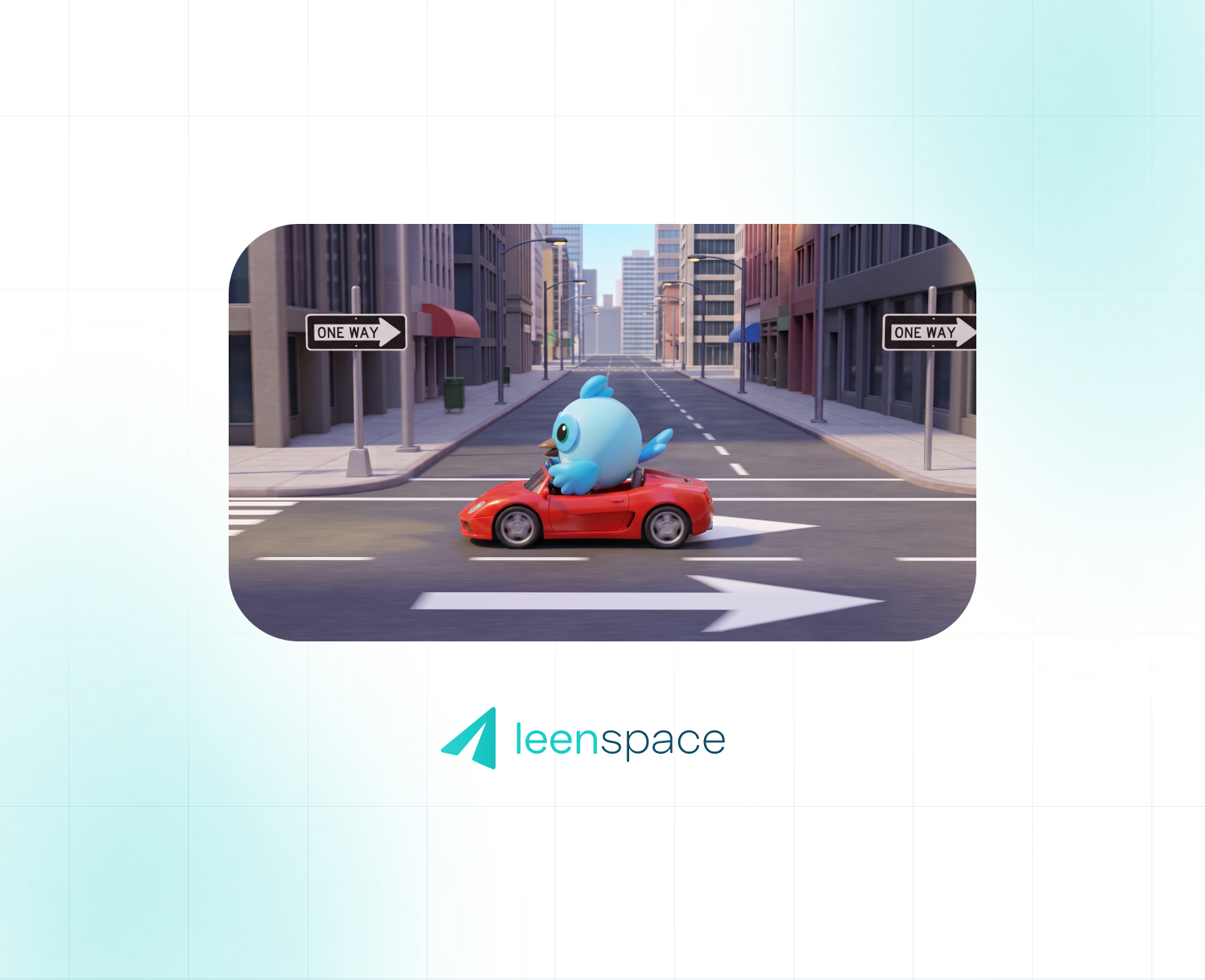
There is a new reflex in software teams: "Code is cheap now, so let's just build it and see."
It sounds reasonable. With agentic engineering, a feature that used to take a sprint can show up as a pull request before lunch. So why spend two weeks in discovery when you can ship three versions in the same time and let the market decide?
Because the market doesn't decide for free. Every version you ship gets users, data, bugs, support tickets and a line on your roadmap. The agent compressed the cost of writing the code. It did nothing to the cost of owning the wrong code.
Here's the reality
Most teams took the time agents gave them back and spent it on more building. Discovery got squeezed along with everything else: shorter kickoffs, thinner specs, fewer conversations with real users. The whole cycle got faster, including the part that decides whether any of it matters.
That was already a problem before AI. Pendo's Feature Adoption Report found that 80% of features in the average software product are rarely or never used, and estimated up to $29.5 billion in public cloud R&D went into features nobody adopted. CB Insights found "no market need" was the top reason startups failed, cited in 42% of the post-mortems they analyzed. Agents don't fix that. They make it faster.
The 2025 DORA report puts it plainly: AI is an amplifier. It makes strong teams better and makes struggling teams' problems louder. One of the clearest multipliers they found was a user-centric focus. Teams that know what problem they are solving get more out of AI. Teams that don't just produce more output.
We see the same pattern in our own projects. The engagements that land on time, on budget and with real adoption are almost always the ones that started with product discovery and prototyping before development. When the vision is clear before the first commit, the build becomes the easy part.
1. Code got cheap. Being wrong didn't.
Think of agentic engineering as swapping a hand saw for a laser cutter. You can cut a hundred pieces in the time it used to take to cut one. But if the measurements are wrong, you now have a hundred wrong pieces, and the wood is still gone.
The real cost of a feature was never the typing. It's everything after: the QA cycle, the edge cases, the database migration you can't undo, the support load, the onboarding screen that has to explain it, and the next three features that get built on top of it. For a CTO, a feature that nobody uses isn't neutral. It's permanent maintenance debt with zero revenue attached.
Faster generation lowers the cost of building, but it raises the volume of things you have to own. Discovery is how you keep that volume pointed at revenue.
2. Agents amplify direction, good or bad.
An agent is a very fast, very literal new hire. Give it a clear brief and it delivers. Give it a vague one and it delivers something confident, polished and wrong, at a pace no human reviewer can keep up with.
That is exactly what DORA measured: AI adoption now correlates with higher throughput, but it still has a negative relationship with delivery stability. More change, more instability, unless the team has strong controls and a clear sense of direction. Vague requirements used to cost you a slow sprint. Now they cost you a fast quarter.
The quality of your input now sets the ceiling on the ROI of every AI tool you pay for.
3. Reinvest the time you saved upstream.
Here's the opportunity most teams miss. If agents cut build time in half, you don't need to ship twice as much. You can spend part of that time making sure what you ship is the right thing.
Agents are great discovery tools too. A clickable prototype that used to take a design sprint can now be in front of real users in days. That changes discovery from "two weeks of documents" to "two weeks of evidence."
In our experience, the projects with the strongest business outcomes are the ones where the team sat down with real end users early, mapped the problems worth solving and agreed on requirements before writing production code. On a marketplace we built for small producers, that upfront work is what led to sellers multiplying their sales after launch. The founders' takeaway for anyone starting a project was simple: be very clear about your needs, and invest in the foundation.
Aweek of validated discovery is cheaper than a month of building, removing and apologizing for the wrong feature.
4. Start with the one problem that pays.
Good discovery doesn't produce a giant backlog. It produces a short, sharp answer to "what is the one problem worth solving first?"
We see this often with operations-heavy businesses. The temptation is to build the full platform on day one. The better move is to find the most urgent, most expensive problem (a costly payment flow, a licensing fee eating margin, a manual process slowing every order) and solve that first. Once it works, scope grows with the business instead of ahead of it. In the projects where we've taken this approach, clients have seen measurable profitability gains within the first year, and in some cases the internal tool became a product of its own.
A clearly defined problem is what makes speed safe. It lets you move fast because you know exactly what "done" means.
5. Discovery is now your agent's context.
In agentic engineering, discovery has a second job. The output of discovery (user problems, constraints, acceptance criteria, what not to build) is exactly the context your agents need to do good work. A well-run discovery phase becomes the spec, the rules file and the test plan.
Skip it, and your agents fill the gaps with assumptions. Do it well, and your agents inherit your understanding of the business. The best compliment a client can give an engineering partner is that they knew what to offer even before the client knew what to ask for. That is what discovery is for, and it's the part an agent can't do on its own.
Better context means fewer review cycles, fewer rewrites and fewer surprises in production.
With poor discovery an agent that builds five times faster just gets you to the wrong place five times sooner.
Bottom Line
Agentic engineering is the biggest productivity shift our industry has seen in a long time, and we use it every day. But speed is only valuable when it's pointed in the right direction.
The teams that win this era won't be the ones that build the most. They'll be the ones that take the time agents gave back and spend it understanding what's worth building.