The Mobile App Landscape is Shifting Under Our Feet
The mobile app landscape is shifting under our feet.
For the last decade, we’ve defined a "good" app by its design, speed, and stability. But as we look toward 2026, the standard is changing. We are entering the era of Agentic AI—where software doesn’t just wait for you to tap buttons, but actively anticipates your needs and executes complex tasks.
The reality? By 2026, apps that aren't AI-powered won't necessarily disappear, but they will feel significantly harder to use.
The Shift: From "Searching" to "Solving"
Current apps are passive tools. You open a supermarket app, type "pizza," scroll through results, check ingredients for allergens, calculate how many you need, and add them to the cart one by one. It’s manual labor, digitized.
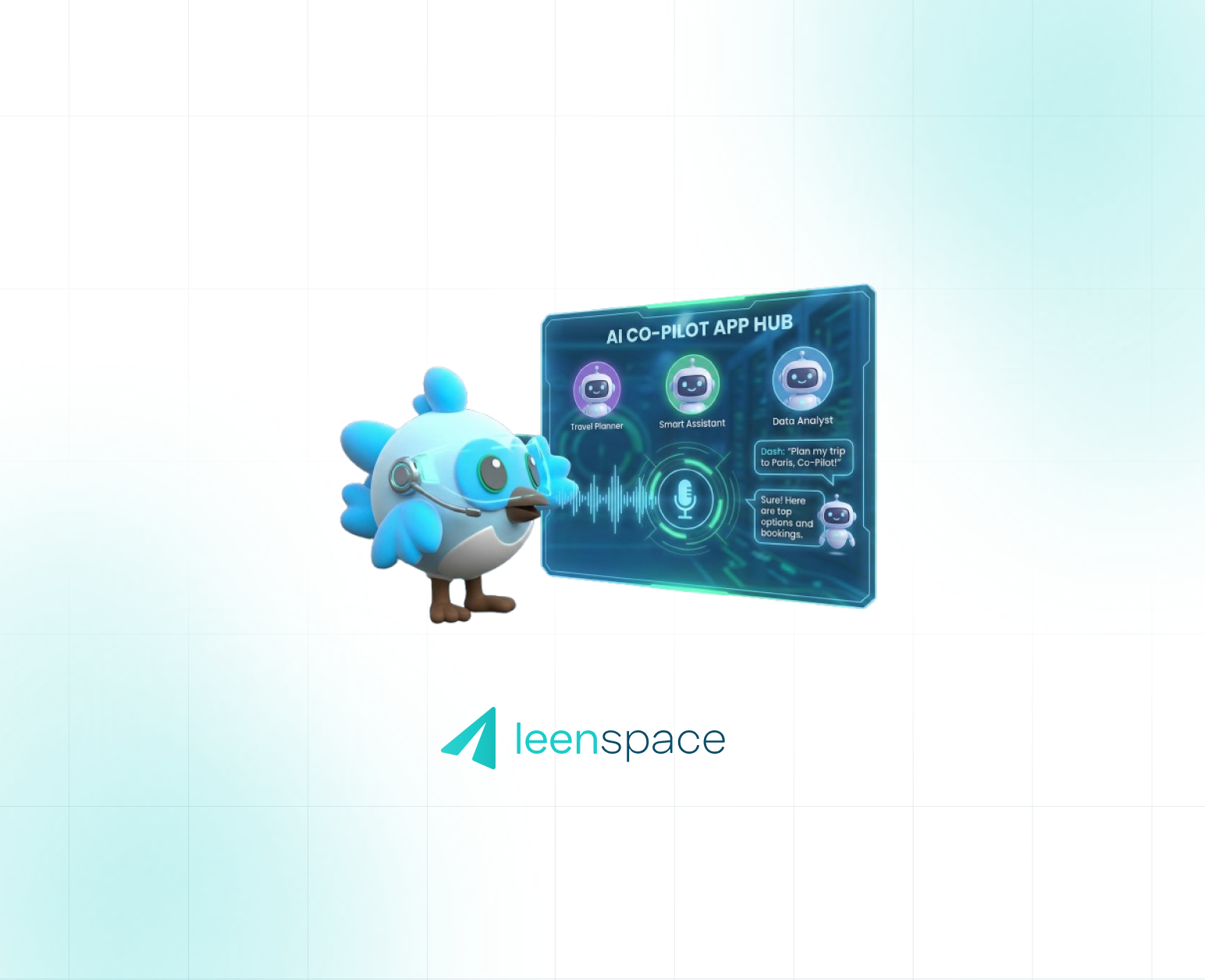
The apps we are building at Leenspace today are different. They are powered by AI Agents—intelligent systems capable of understanding intent, context, and complex constraints.
The Future of Shopping: A Hands-Free Birthday Hero
Let's look at a real-world scenario. You are driving home, and you realize you haven't planned your son's birthday dinner.
- The Old Way: You wait until you get home, open an app, and spend 45 minutes searching for recipes, calculating quantities for a large group, and reading tiny digital labels to check for allergens.
- The Agent Way: You simply tap the microphone while driving and say:
"I have to organize a birthday party for my 9-year-old son. There are 15 friends coming to the house at night, so I need dinner options, some drinks, and dessert. Oh, and remember that two of his friends are celiac, so please have safe options available for them."
Here is what happens next—without you touching the screen:
- Intent Understanding: The Agent identifies the event (Birthday), the demographic (Kids, age 9), and the volume (15 people).
- Nutritional Analysis: It filters its entire inventory for "Gluten-Free" (Celiac-safe) products, accessing deep nutritional data that a standard search bar ignores.
- Curation: It builds a menu. Perhaps it selects a "Build Your Own Taco" kit (easily separable ingredients) or Gluten-Free Pizza options for everyone to avoid cross-contamination.
- Execution: It presents a full cart with the exact quantities needed for 15 kids, ready for checkout.
This isn't just "voice search." This is an Agent understanding a complex objective. It bridges the gap between a vague human desire ("a party") and a concrete logistical solution (the shopping list).
Don't Get Left Behind the Curve
History is unkind to technology that refuses to adapt. Just as websites without mobile optimization died in 2015, apps without AI Agents will struggle to survive in 2026.
Users will inevitably gravitate toward the path of least resistance. If your competitor’s app acts as a nutritionist and event planner, and yours is just a digital catalog—you’ve already lost.
At Leenspace, we aren't waiting for 2026. We are integrating Agentic workflows into our clients' mobile products today.
Are you building an app for the past or for the future?